What Custom Merch Actually Costs: A Straight-Talk Budgeting Guide for Small Businesses
Ask three business owners what custom merch costs and you’ll get three wildly different answers. One spent $400 on a pallet of pens nobody wanted. One spent $4,000 on jackets that got worn for six years. One got quoted $12 a shirt, panicked, and never followed up. The custom merch cost question is the single biggest thing that stalls a branded merchandise order, not because the numbers are scary, but because nobody explains what actually drives them.
So let’s fix that. Here’s how pricing really works, what moves the needle, and how to build a merch budget that gets you results instead of a closet full of regret.
What Actually Drives the Price
Four things set the number on your quote, and only one of them is the product itself.
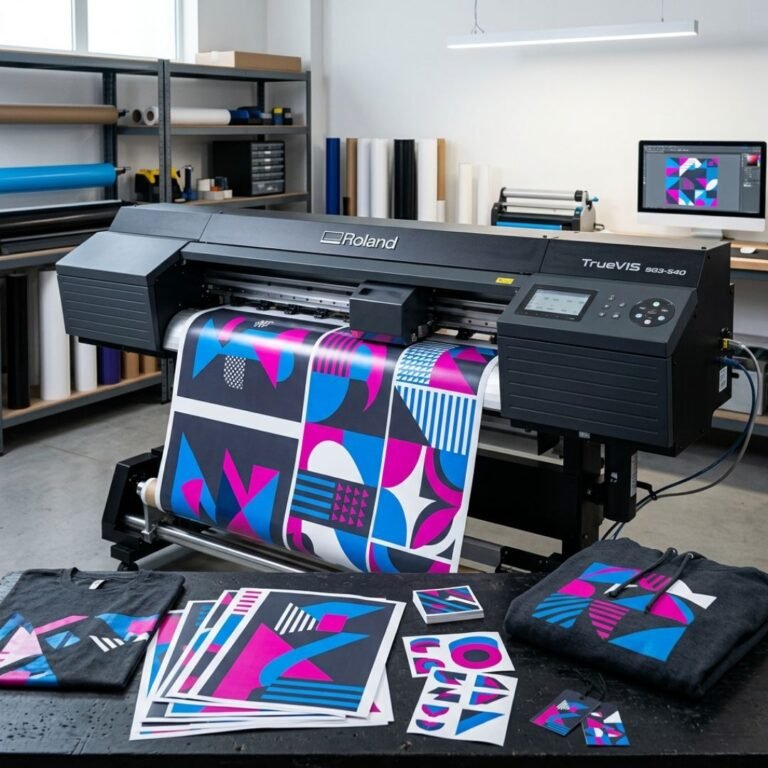
Quantity. This is the big one. Setup costs (screens, embroidery digitizing, print plates) are fixed. Whether you order 12 shirts or 500, someone still has to burn the screen. Spread across 12 units, that setup is brutal. Spread across 300, it disappears. That’s why your per-piece price drops so sharply as volume climbs, and why the “just order a dozen” instinct is usually the most expensive way to buy.
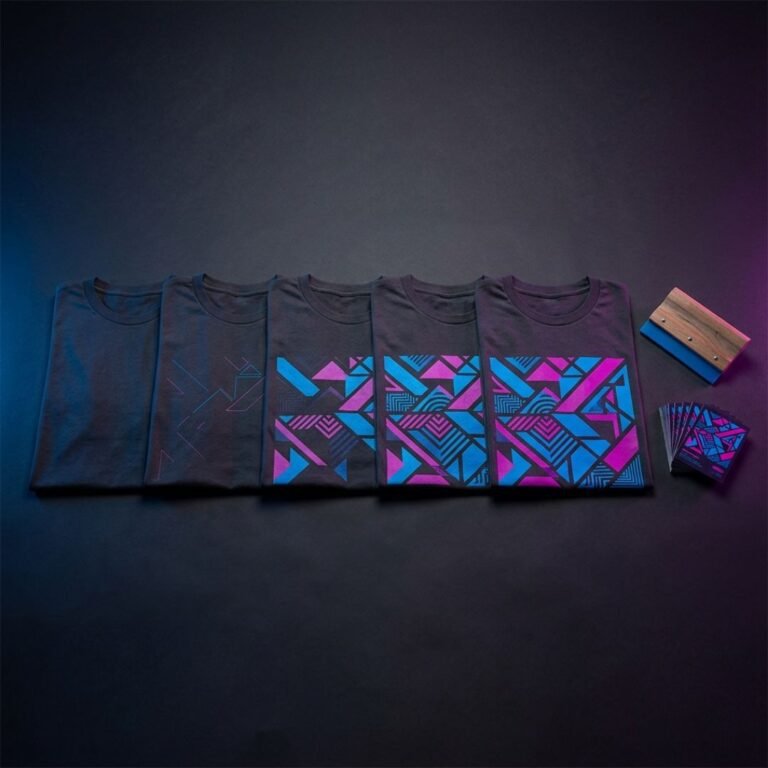
Number of colors and print locations. Every ink color in a screen print is a separate screen. Every print location (front, back, sleeve) is a separate pass. A one-color left-chest logo is cheap. A six-color full-back graphic plus a sleeve hit is a different animal entirely. If your logo has gradients or forty shades, ask about digital printing before you assume you’re locked in.
Decoration method. Screen printing, embroidery, heat transfer, direct-to-film, laser engraving, and pad printing all price differently and suit different products. Embroidery is priced by stitch count, so a dense, detailed logo on a hat costs more than a simple wordmark. Nothing here is arbitrary, it’s just machine time.
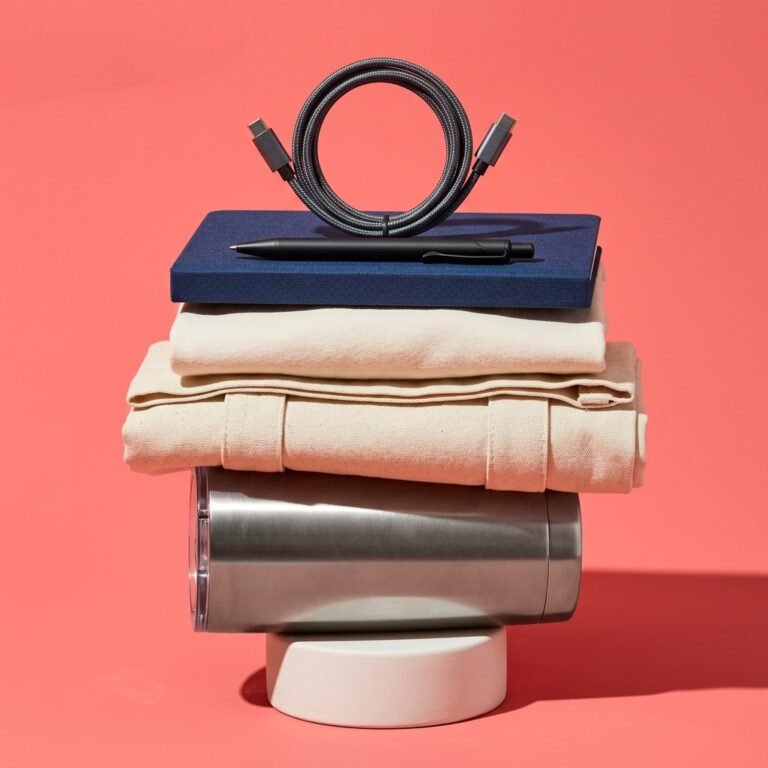
The blank itself. A basic cotton tee and a premium tri-blend can differ by $8 before anyone touches it with ink. Same with drinkware: a plastic tumbler versus an insulated stainless one is a real gap. This is where you have the most control, and where you should spend the most thought.
Realistic Ballparks (So You Can Plan)
These are broad ranges, not quotes, but they’ll keep you from being blindsided:
- Pens, stickers, magnets, keychains: under $2 each at volume. High quantity, low unit cost, great for foot traffic and giveaways.
- T-shirts, one-color print: roughly $9–$18 depending on blank quality and quantity.
- Embroidered caps and polos: roughly $18–$35.
- Drinkware and tumblers: roughly $12–$30.
- Premium outerwear and jackets: $45 and up, often well up.
- Print materials (business cards, flyers, banners, etc): wildly variable, but a run of quality business cards is one of the cheapest brand investments you can make. Notice the spread inside every category. That spread is where the real decisions live.
Build the Budget Backward From the Job
The most useful question isn’t “what can I afford?” It’s “what is this item supposed to do?”
Merch does three different jobs, and each deserves a different budget:
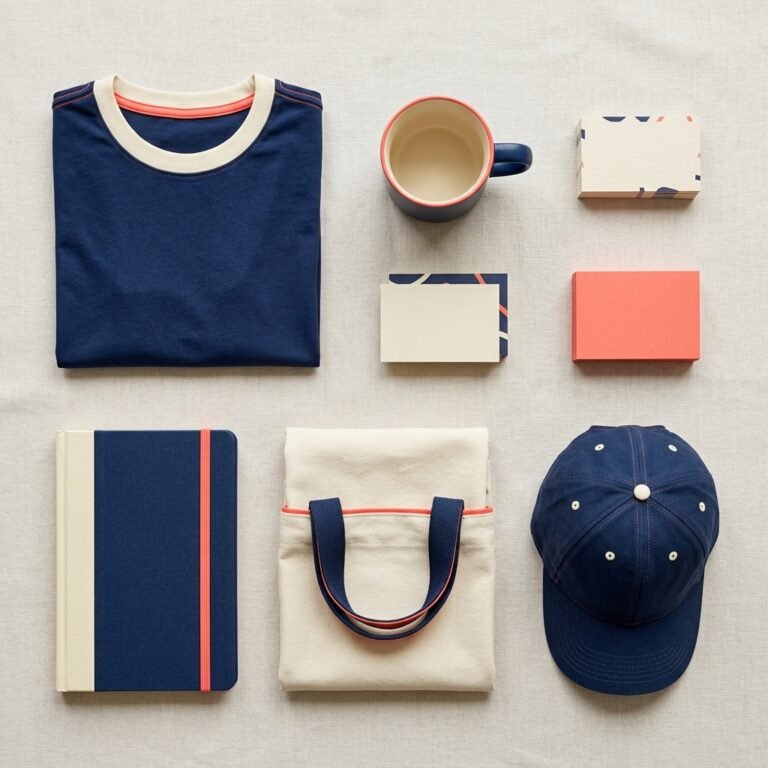
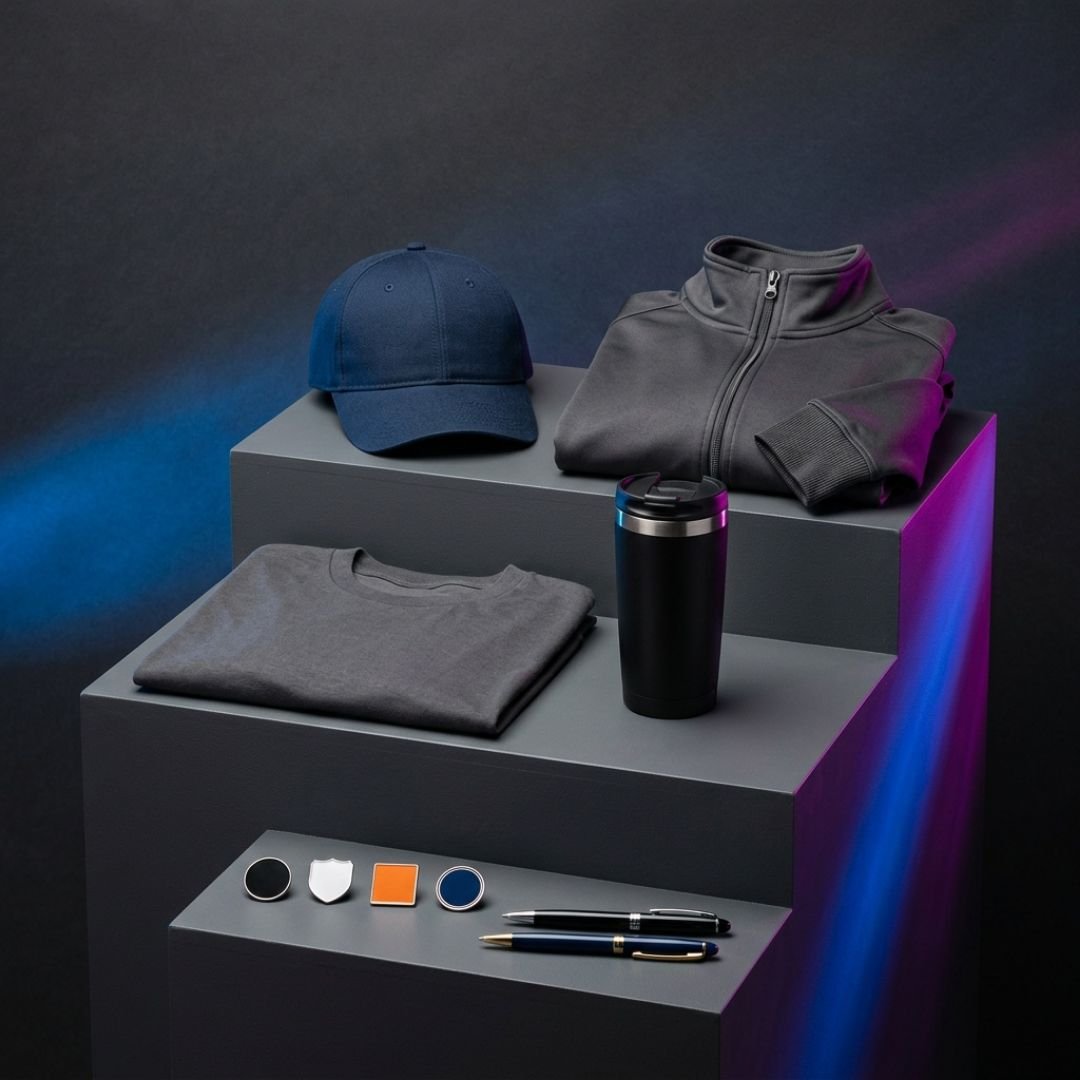
Reach items go to lots of people you don’t know yet. Stickers, pens, tote bags, koozies. Optimize for quantity and usefulness, you want the thing to survive past the parking lot. Spend low per unit, buy deep.
Relationship items go to clients, partners, and prospects you actually want to impress. A good tumbler, a nice cap, a well-made notebook. Spend more per unit and buy far fewer. One $30 item that sits on a decision-maker’s desk beats 200 $1 items in a landfill.
Identity items go to your own team. Uniforms, staff polos, crew jackets. These are working assets, they get worn constantly, they show up in every customer interaction and every photo. Buy quality here. Cheap staff apparel looks cheap on your business every single day.
Split your annual merch spend across those three buckets and the numbers stop feeling random.
Where People Waste Money
A few patterns we see over and over:
- Ordering too few. Paying setup twice in three months costs more than ordering right the first time.
- Buying the cheapest blank. A shirt that pills after two washes doesn’t market anything.
- Dated designs. Putting a phone number or a year on merch guarantees it becomes garbage on a schedule.
- No plan for distribution. Boxes of swag in a storage closet have a 0% ROI. Decide who gets it and when before you order it.
- Rush fees. Standard turnaround is dramatically cheaper than a rush. Plan four to six weeks out and keep that money.
The Cheapest Line Item Is Getting It Right
The real cost of custom merch isn’t the invoice. It’s the reorder you have to do because the color was wrong, the logo was pixelated, or the fit was off. Working with someone who catches those things before production is worth more than a few cents a unit, every time.
If you want a real number for your actual project, we’ll walk you through the options, show you where to spend and where to save, and get you a quote that makes sense. Start the conversation at amplifiedink.co. Bring your budget, and we’ll tell you honestly what it can do.